Emergency Ship Spare Parts Delivery in the UAE
A vessel with a defect and a departure time is a different problem from routine procurement. This is what actually happens between the call and the part being aboard — and where the time really goes.
Last reviewed · SCARDET Ship Spares
Urgent ship spares in the UAE are typically aboard within 24 to 48 hours: the part is identified from the engine nameplate, cleared through Dubai or Sharjah airport, then delivered to the berth or taken out by launch boat to vessels at the Fujairah anchorage or off port limits. Same-day delivery to Fujairah anchorage is normal for items already held in the UAE. SCARDET operates a 24/7 desk from Dubai.
What to Look For in the UAE
The criteria below are the ones that decide whether a supplier helps or costs you time. They are also how the suppliers on this page are described.
- 1
Can they deliver at anchorage, not just alongside
At Fujairah most vessels bunker at anchor and never come alongside. A supplier who can only reach a quay cannot help you there. Ask specifically whether they book the launch boat themselves or expect you to arrange it.
- 2
Do they clear customs, or hand it back to you
Clearance at Dubai or Sharjah airport, and free-zone paperwork at Jebel Ali, is where urgent consignments actually stall. One party should own sourcing, clearance and the final run — a handover halfway is a delay waiting to happen.
- 3
Is the 24/7 desk real
Breakdowns do not respect office hours. The test is whether a call at 03:00 reaches someone who can price and source, or an answering service that logs it until morning.
- 4
Will they tell you when the timing does not work
The most useful answer to an urgent enquiry is sometimes "that part cannot reach you before you sail — here is what can". A supplier who agrees to everything and then misses is worse than one who says so upfront.
Step by Step
What happens between the call and the part being aboard, in the order it happens.
- 1
Identify the part exactly, before anything else
Photograph the equipment nameplate and any stamped markings on the failed component. Engine make, full type designation and the part number from the spare parts catalogue if you have it. This single step causes more delay than shipping does — a part sourced against a guess arrives wrong and the clock restarts.
- 2
State the vessel's position and the real deadline
Alongside, at anchorage, or off port limits — and the ETD, not a vague "urgent". Delivery to a berth in Jebel Ali and a launch run to the Fujairah anchorage are different operations with different cut-offs.
- 3
Get availability confirmed, not just a price
Ask whether the item is held in the UAE, sourced regionally, or on manufacturer lead time. Those three answers mean same-day, 24 to 48 hours, and weeks respectively. A quote without that distinction tells you nothing about whether you will sail on time.
- 4
Decide the route: local stock or air freight
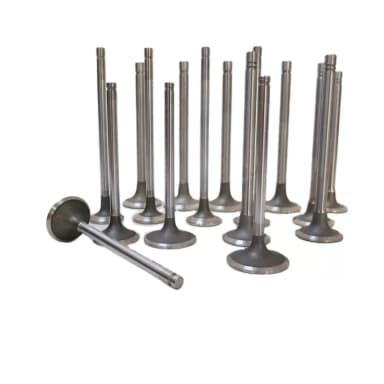
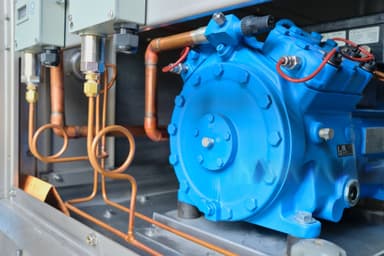
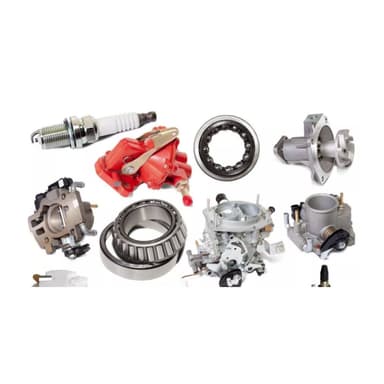
Fast-moving engine-room items — fuel valves and nozzles, liner and ring sets, bearings, purifier bowl parts, compressor valve sets, pump seals — are commonly held in the UAE. Anything else is flown in and cleared on arrival at Dubai or Sharjah.
- 5
Customs clearance and agent coordination
The supplier prepares the documentation and liaises with your port agent for the delivery order. For Jebel Ali this includes free-zone paperwork. Getting the declaration right at the outset is what keeps the consignment moving.
- 6
Final delivery — berth or launch boat
Alongside at Jebel Ali, Mina Rashid, Khalifa Port, Mina Zayed, Khor Fakkan or Sharjah. For Fujairah anchorage and OPL, a launch boat is booked and loaded, and the run is timed so the parts reach you before you weigh anchor.
- 7
Check the paperwork before the surveyor does
Certificates of conformity and material traceability should arrive with the consignment. An urgent part that lands without its documentation solves today's problem and creates next month's at the survey.
Why Fujairah is the decisive test of an urgent supplier
Fujairah is the second largest bunkering hub in the world and sits outside the Strait of Hormuz, which makes it the first practical anchorage for a vessel that has discovered a defect mid-voyage. Hundreds of ships are at anchor there at any moment and most never come alongside. Everything about emergency supply here happens by launch boat, and a supplier's ability to book, load and run one at short notice — day or night — is what separates a real capability from a website claim.
Where the time actually goes
Owners tend to assume transport is the bottleneck. It rarely is. In our experience the delays come from three places: a part identified imprecisely and therefore sourced wrong, a customs declaration that was not prepared correctly at the outset, and a handover between a supplier and a separate logistics party where neither owns the outcome. Air freight from most sourcing markets into Dubai is a matter of hours; the surrounding coordination is what takes days when it goes wrong.
What can realistically be delivered same day
Items held in the UAE — fuel valves and injection nozzles, cylinder liner and piston ring sets, main and crankpin bearings, purifier bowl discs and gravity rings, air compressor valve sets, pump mechanical seals and wear rings, and gasket and overhaul kits. Genuine OEM components on manufacturer lead time cannot be compressed by any supplier, and anyone promising otherwise is either substituting a different part or is about to miss.
Dry dock is an emergency with a longer fuse
A docking window is fixed, and a long-lead item discovered in week three costs far more than it would have if flagged at quotation. The remedy is the same as for a breakdown: identify precisely, ask which category each item falls into, and get the long-lead ones ordered before the vessel enters the dock rather than after.